Programs
A wide-ranging library, taught differently in every community
4 Green Futures doesn't hand every chapter the same fixed curriculum. We teach recycling, deforestation, climate change, wildfires, water pollution, invasive species, and more — and each chapter decides which of those topics matter most for the students in front of them.
The full topic library
8+ topic areas and growing
Every chapter pulls from this shared, expanding library and adapts each topic to its own community and age group.
Recycling & waste
Sorting, reducing, and reusing — the everyday habits that cut waste at home and at school, taught through hands-on sorting games and simple swaps kids can make right away.
Deforestation
What forests do for us, what happens when they disappear, and what it takes to bring them back.
Wildfires
Why wildfires happen, how they're changing, and how communities in fire-prone regions can build resilience.
Climate change & global warming
Age-appropriate, hopeful framing of one of the hardest topics in environmental education — what's happening, why it matters close to home, and what students can actually do.
Water pollution & aquatic life
What pollutes local rivers, lakes, and coastlines, and how it affects the species living there.
Native & invasive species
The plants and animals that belong in a student's own backyard, the ones crowding them out, and what protecting biodiversity actually looks like locally.
Conservation & composting
Composting, community gardens, and take-home plants that turn a single lesson into a habit that lasts well beyond the event.
Book readings & storytelling
Environmental stories read aloud and discussed in a way that connects the story directly to a student's own neighborhood.
Always growing
Every new chapter can bring a new local priority into the shared library — this list isn't fixed.
How curation works
Same library, different emphasis by community
Our mentors live in the communities they teach in, so a chapter director already knows which issues matter most to their own elementary schools — nobody's handing them a generic slide deck. Here's what that looks like in practice:
A chapter in a big city
Students spend more time on urban green space, air quality, and where recycling actually goes once it leaves the bin — the stuff they run into on their own block.
A chapter in a small town
Students spend more time on farmland runoff, local wildlife, and the woods and creeks right outside their back door.
Both chapters are still drawing from the exact same library above — recycling, climate change, conservation, and everything else stays available to every chapter. The chapter director plans which topics to lead with, and 4 Green Futures leadership approves the plan.
From the classroom
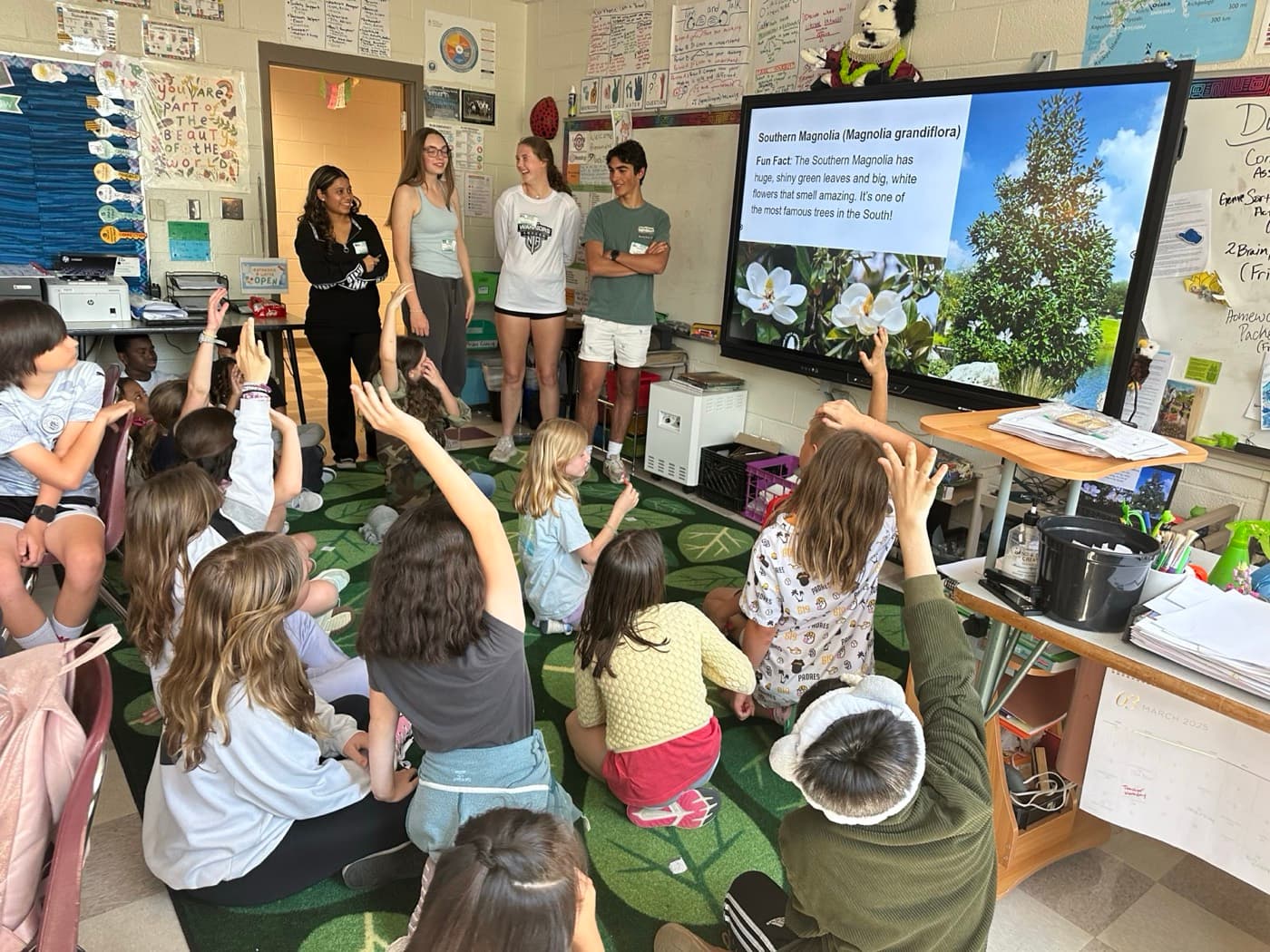
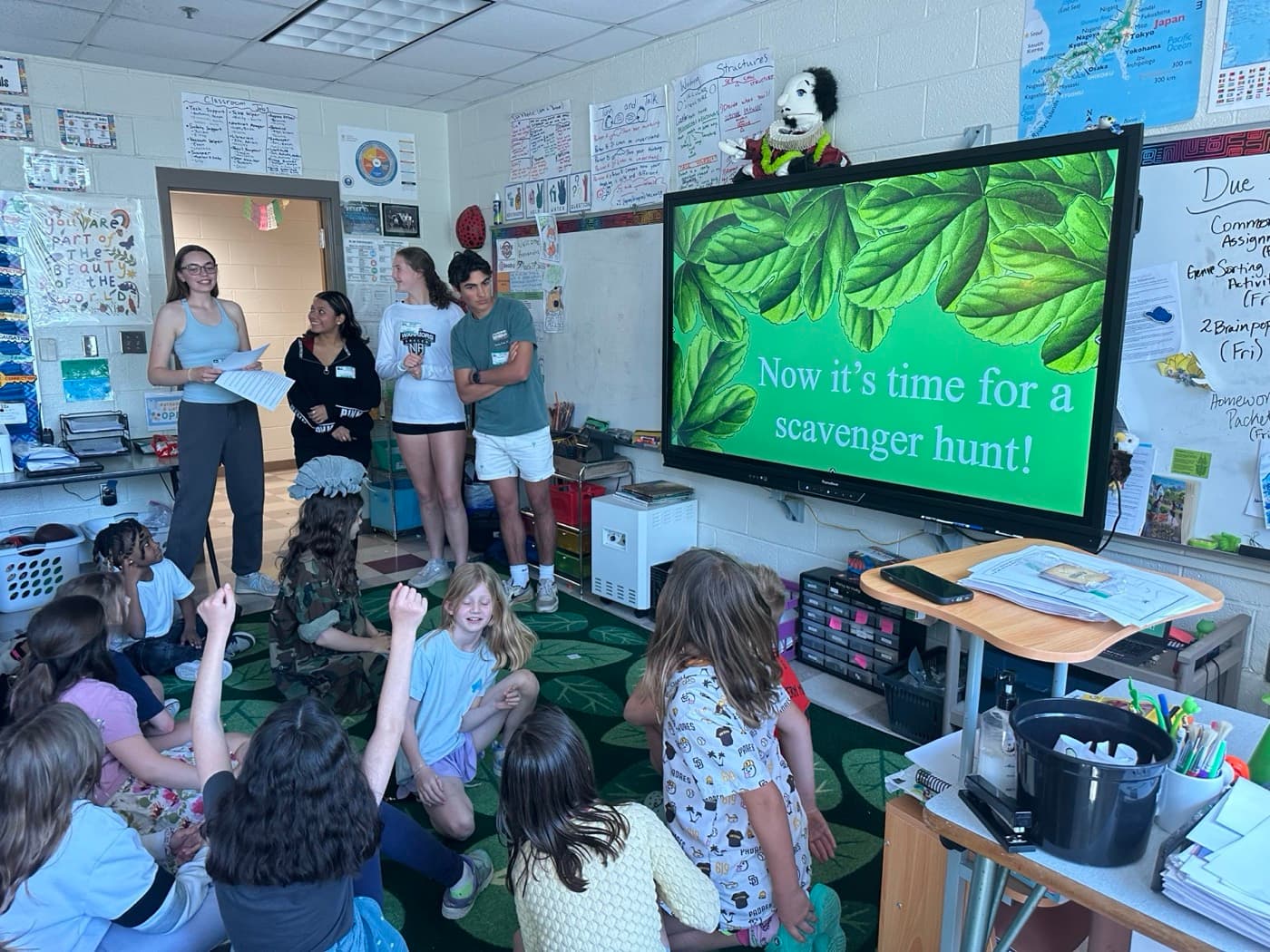
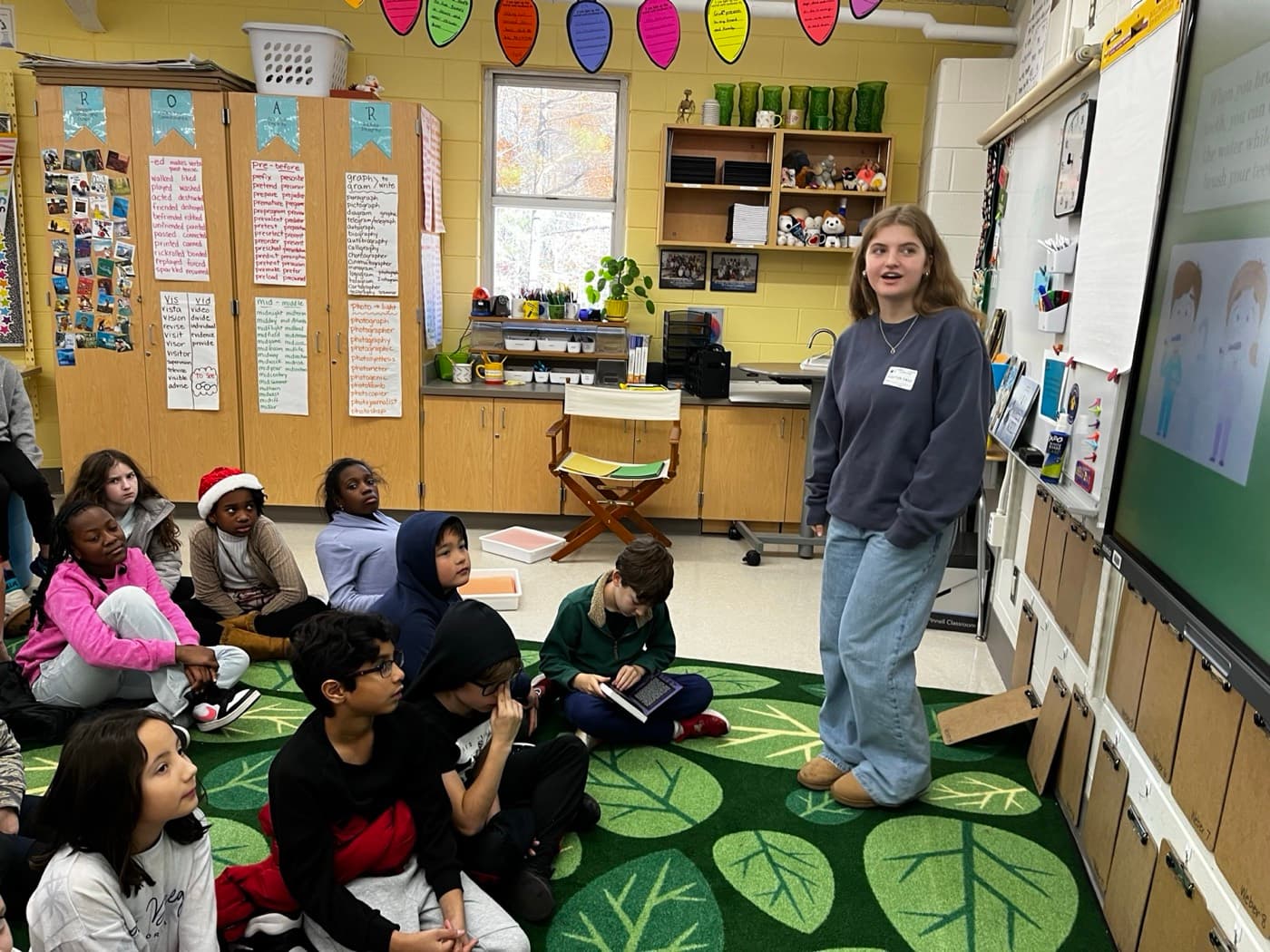
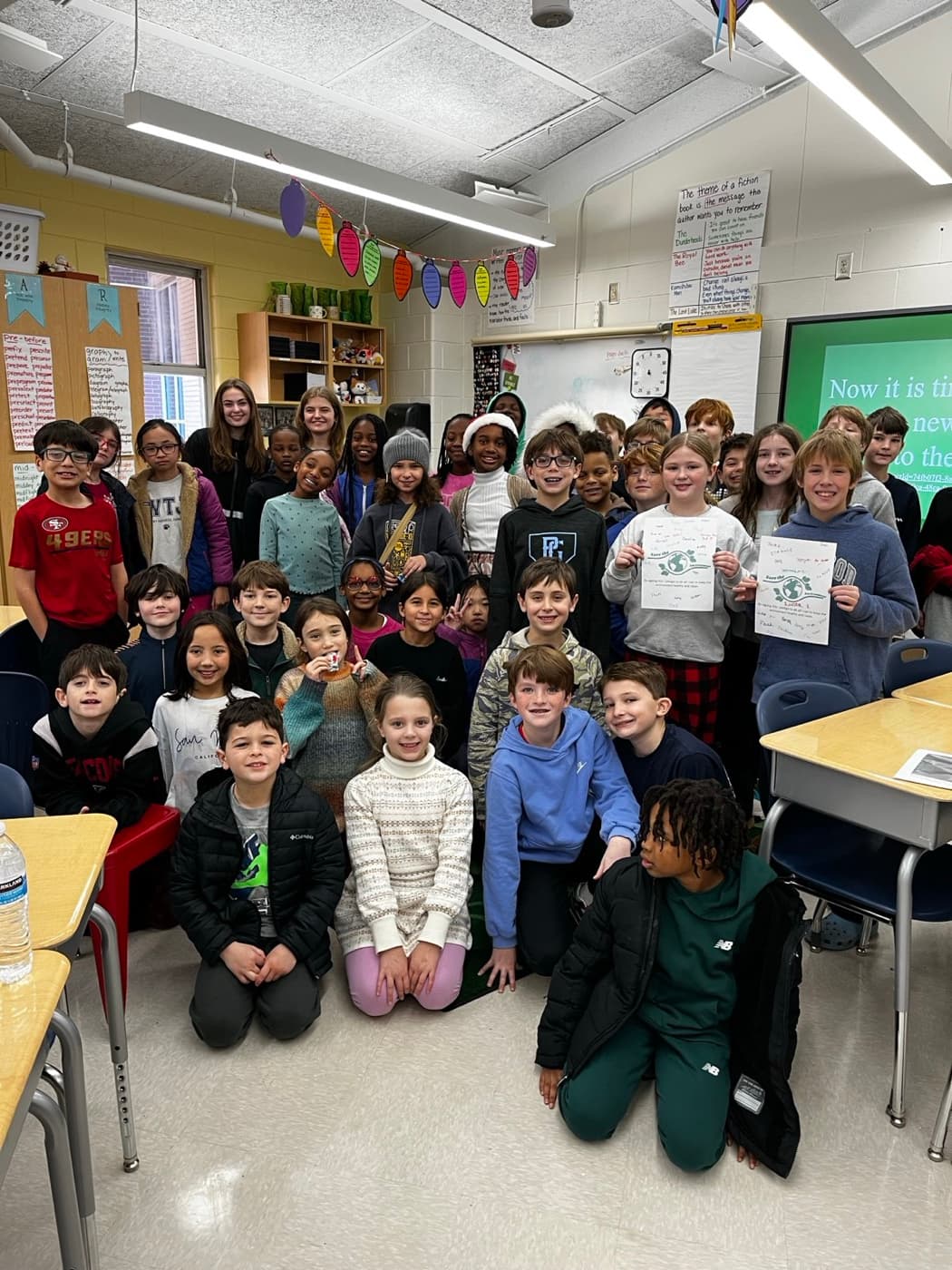
Books 4 Green Futures
Our literacy-focused branch pairs environmental education with reading. Volunteers collect and read environmental books with young students, building both a love of reading and a love of the planet at the same time.
Interested in Books 4 Green Futures for your school or classroom? Reach out on Instagram @4greenfutures or through your local chapter's director and we'll get in touch.
Teachers: bring us to your classroom
Events are planned in advance with you and tailored to your grade and your community. Directors are happy to run event ideas by you beforehand and work around your schedule.
Get in touch